

A business loan broker connects you with multiple lenders, while a bank is a direct lender that funds loans from its own capital. That single distinction shapes everything: your product options, your approval timeline, your total cost, and your risk exposure. Choosing between a business loan broker vs bank is one of the most consequential financing decisions a small business owner makes. Get it right and you access the best deal available. Get it wrong and you pay more, wait longer, or end up with a product that doesn't fit your business.
What are the main differences between a broker and a bank?
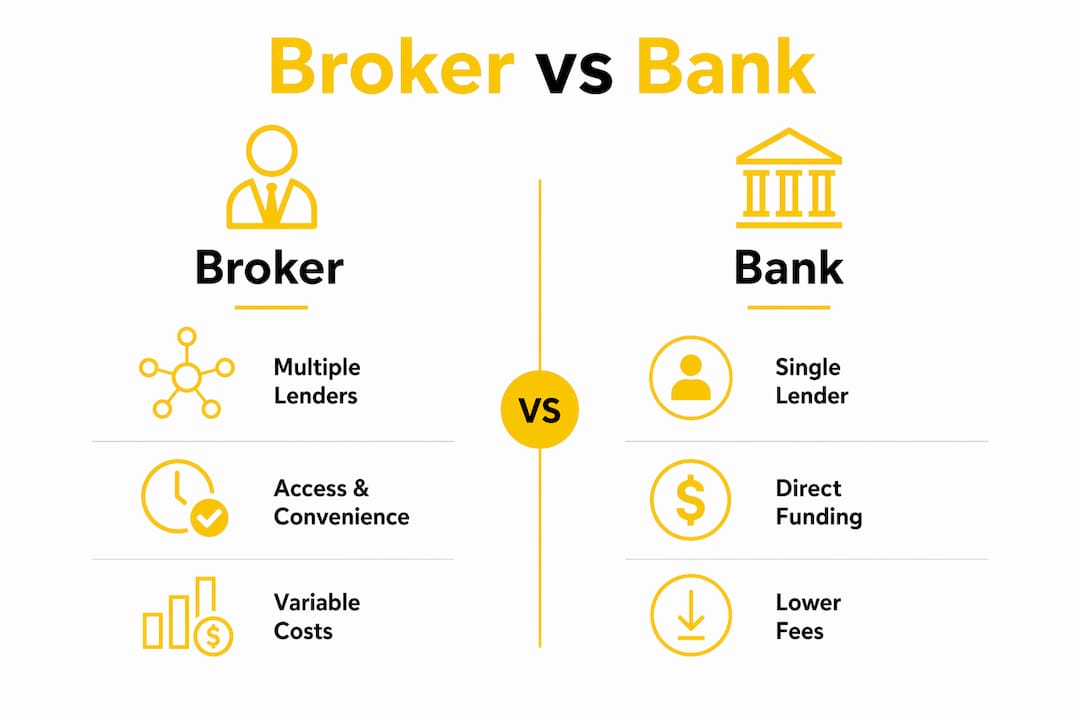
A business loan broker acts as an intermediary. The broker reviews your profile, submits to multiple lenders, and presents the best offers back to you. The broker does not fund the loan. A bank, by contrast, uses its own capital to fund loans and makes every credit decision in-house.
This structural difference has real consequences. A broker's value is access and convenience. A bank's value is directness and cost efficiency. Neither is universally better. The right choice depends on your business profile, how fast you need funds, and how complex your financing need is.

Small business owners typically face this decision when applying for working capital, equipment financing, SBA loans, or commercial real estate funding. Each of those products behaves differently depending on whether you go direct or through a broker.
How do loan options compare between brokers and banks?
Banks offer only their own products. If your local bank doesn't offer merchant cash advances or invoice factoring, you simply don't get those options there. A broker's network can include 30+ lenders with different credit criteria, product types, and underwriting models. That breadth is the core loan broker benefit.
Here's how the product availability compares across the two channels:
| Feature | Business loan broker | Bank (direct lender) |
|---|---|---|
| Number of lenders | 10 to 30+ in network | 1 (the bank itself) |
| SBA loans | Yes, via SBA-approved lenders | Yes, if bank is SBA-approved |
| Merchant cash advances | Yes, via alternative lenders | Rarely |
| Equipment financing | Yes, multiple providers | Sometimes |
| Invoice factoring | Yes, via specialty lenders | Rarely |
| Niche/industry-specific products | Yes | Limited |
The practical implication is clear. If your business needs a standard term loan and you have strong financials, a bank can serve you well. If you need a specialized product or your credit profile is unconventional, a broker's lender network gives you options a single bank simply cannot match.
Brokers also route applications to lenders whose underwriting criteria fit your specific situation. A lender that specializes in construction businesses, for example, will assess your application differently than a generalist bank. Brokers who know their lender panels can place your file with the right underwriter from the start.
How does approval speed differ between brokers and banks?
Speed is where the business loan comparison gets complicated. Traditional banks take 2 to 8 weeks to fund loans due to thorough in-house underwriting and documentation requirements. Online lenders accessed through brokers can deliver funds in 1 to 5 business days. That gap matters enormously if you need capital quickly.
However, brokers can also slow things down. Files moving through multiple parties add intermediary steps that direct lenders don't have. When an underwriter has a question, it goes to the broker, then to you, then back through the broker. That communication chain adds days.
Here's a realistic timeline comparison by loan type and channel:
| Loan type | Bank (direct) | Broker pathway |
|---|---|---|
| SBA 7(a) via PLP lender | 60 to 90 days | 30 to 45 days |
| Conventional term loan | 2 to 4 weeks | 1 to 3 weeks |
| Online business loan | Not typically offered | 1 to 5 business days |
| Equipment financing | 1 to 3 weeks | 1 to 2 weeks |
SBA loans are a notable exception where brokers can actually accelerate the process. Brokers with access to Preferred Lender Program lenders have delegated approval authority, cutting SBA timelines nearly in half compared to non-PLP lenders.
Pro Tip: Prepare your full underwriting package before you contact either a broker or a bank. A complete documentation package includes 3 to 6 months of bank statements, 2 years of tax returns, current financials, business licenses, and a clear loan purpose description. This single step compresses funding timelines more than any other factor.
What are the cost differences between using a broker and a bank?
Cost is where many small business owners get surprised. Broker commissions typically range from 1 to 6% of the loan amount, varying by product type. These fees are often paid by the lender, not directly by you. But they are built into the loan pricing, which means you pay them through a higher interest rate or adjusted terms.
Here's how commissions break down by loan type:
- SBA loans: 1 to 2% broker commission
- Bank term loans: 1 to 3%
- Online lending: 2 to 4%
- Merchant cash advances: 3 to 6%
Banks don't charge broker commissions. Going direct means those basis points stay in your pocket. On a $500,000 loan, a 3% broker commission embedded in your rate represents $15,000 in additional cost over the life of the loan. That's real money.
The bigger risk is opacity. Many states do not mandate broker commission disclosures for commercial loans, which means borrowers often don't know what the broker is earning. Some brokers are transparent about this. Others are not. Always ask for a full, itemized fee disclosure before you sign anything. If a broker resists that request, walk away.
Pro Tip: When comparing loan offers from a broker and a bank, ask both parties for the Annual Percentage Rate, not just the interest rate. APR includes fees and gives you a true cost comparison across different loan structures.
When does working with a broker give you a real advantage?
Brokers add the most value in specific situations. If your business profile is straightforward and your credit is strong, a bank is often the better choice. But several scenarios make a broker the smarter move.
- Your credit profile is complex. Businesses with thin credit history, recent late payments, or unconventional revenue streams often get declined by banks. Brokers can route your application to lenders with more flexible underwriting.
- You've already been declined. Multiple direct lender rejections are a clear signal to engage a broker. They know which lenders are currently active in your niche and deal size.
- You need a specialized product. Merchant cash advances, revenue-based financing, and specialty equipment loans are rarely available at traditional banks. Brokers access these through their lender panels.
- You lack time to research lenders. A broker handles the market research, application packaging, and lender negotiations. For a busy owner, that time savings has real value.
- You want negotiation leverage. Established brokers with high loan volumes have relationships with lenders that individual borrowers don't. That relationship can translate into better pricing or terms.
Use brokers strategically when your business profile is complex or when you've been declined by multiple direct lenders. That's the scenario where broker access genuinely changes your outcome.
One important caution: vet your broker carefully. Ask how many lenders are in their panel, how they are compensated, and whether they have experience in your industry. A broker who earns more from one lender than another has an incentive to steer you toward that lender regardless of whether it's the best deal for you.
What are the risks of using a business loan broker?
The broker industry carries real risks that every borrower should understand before committing.
- No universal licensing requirement. Anyone can call themselves a business loan broker. There is no standardized national licensing framework for commercial loan brokers in most markets. Quality and ethics vary dramatically.
- Hidden fees and unclear cost structures. Broker commissions embedded in loan pricing are legal but not always disclosed. You may not know your true borrowing cost until you read the fine print.
- Communication delays. Every question from an underwriter passes through the broker before reaching you. That adds time and creates opportunities for miscommunication.
- Incentive misalignment. A broker paid more by one lender than another may recommend that lender even when a better option exists. This is the most common conflict of interest in the broker channel.
- Duplicate submission risk. Applying through both a broker and a direct lender to the same institution simultaneously creates confusion and can delay your approval. Coordinate carefully if you pursue both channels.
"Transparency in fees varies widely. Borrowers should insist on clear, itemized cost disclosures to avoid surprises." — Crestmont Capital
To protect yourself, verify that your broker can name every lender in their panel, explain exactly how they are compensated, and provide references from past clients in your industry. A reputable broker welcomes that scrutiny. A problematic one deflects it.
Key takeaways
Choosing between a business loan broker and a bank comes down to your credit profile, product needs, timeline, and willingness to pay for access and convenience.
| Point | Details |
|---|---|
| Brokers expand your options | A broker network can include 30+ lenders with diverse products banks don't offer. |
| Banks cost less upfront | No broker commissions means lower total borrowing cost for straightforward loans. |
| Speed depends on the path | Online lenders via brokers fund in 1 to 5 days; banks take 2 to 8 weeks on average. |
| Broker quality varies widely | No universal licensing exists, so vetting credentials and fee transparency is non-negotiable. |
| Documentation accelerates everything | A complete underwriting package reduces funding timelines regardless of which channel you use. |
My take on the broker vs. bank decision
I've seen small business owners make this decision well and make it badly. The ones who get it wrong almost always share one trait: they chose a channel before they understood their own profile.
Here's what I've found actually works. If you have two years of clean financials, a credit score above 680, and need a standard term loan or line of credit, go direct to a bank first. The cost savings are real, the communication is cleaner, and you maintain full control over the process. Don't pay a broker commission for a deal you could have placed yourself.
But if you've been in business less than two years, your revenue is seasonal, your industry is considered high-risk, or you need a product like a merchant cash advance or revenue-based financing, a broker is not just convenient. A broker may be the only path to a yes.
The part most articles skip is the documentation piece. I've watched deals that should have taken three weeks drag out to eight weeks because the borrower wasn't prepared. Whether you go direct or through a broker, build your underwriting package before you make a single call. Bank statements, tax returns, financials, licenses, and a clear loan purpose statement. Have it ready. That preparation signals to every lender that you are a serious borrower, and it compresses timelines faster than any other factor.
One more thing: never skip the fee disclosure conversation. Ask every broker, in writing, what they earn from each lender on your deal. If they won't tell you, that's your answer.
— adrian
Find the right financing path faster with Youfundr
Deciding between a broker and a bank is easier when you can access both options in one place. Youfundr is a two-sided marketplace built for Australian ABN holders who need funding fast. You submit your details once, and registered brokers on the platform compete to reach you first. Funding ranges from $5,000 to $20 million and beyond, with brokers contacting qualified leads within minutes of submission.

If you're a broker looking for high-intent leads, the Youfundr broker platform connects you directly with business owners who are ready to borrow. No cold outreach. No wasted time. Just verified leads from ABN holders actively searching for financing. Submit your details today and see which brokers compete for your deal.
FAQ
What is the main difference between a broker and a bank for business loans?
A business loan broker connects you with multiple lenders but does not fund the loan itself. A bank is a direct lender that funds loans from its own capital and makes all credit decisions in-house.
How much does a business loan broker typically charge?
Broker commissions range from 1 to 6% of the loan amount depending on the product type, with merchant cash advances at the higher end and SBA loans at the lower end. These fees are often embedded in the loan pricing rather than charged directly to the borrower.
Is it faster to get a business loan through a broker or a bank?
It depends on the loan type. Online lenders accessed through brokers can fund in 1 to 5 business days, while traditional banks typically take 2 to 8 weeks. However, brokers can add communication delays because files pass through an intermediary before reaching the underwriter.
When should I use a broker instead of going directly to a bank?
Use a broker when your credit profile is complex, you've been declined by multiple direct lenders, or you need a specialized product like a merchant cash advance or revenue-based financing that banks don't typically offer.
Are business loan brokers regulated?
Business loan brokers are not universally licensed or regulated in most markets. Anyone can legally operate as a commercial loan broker, which means quality and ethics vary significantly. Always verify credentials, ask for fee disclosures, and request references before working with a broker.